

The Long Bony Finger
The prophet and the philosopher are both pointers. Prophets point at, philosophers point out. But both point. By doing so, they endeavor to carry to consummation that spontaneous act of

Essay on the cenoscopic/idioscopic revised and published in the USA
On the Cenoscopic and the Idioscopic The edition available in my list of Essays (under the “Works” menu) is actually more interesting, for it includes a number of illustrations. The


The Philosopher and the Poet – Siblings in Intuition
Aristotle teaches that the philosopher and the poet both attend to the marvelous, and thus enjoy an occupational kinship. We might expand upon his observation by identifying the effects of

Protology and Eschatology in Miniature
(Portuguese original here: Protologia e escatologia em miniatura) Many today, even those otherwise sympathetic to Christianity, find the Bible simply unbelievable. Foremost among the reasons are that its beginning seems so

Apocalypse Recordings in New Home
My 1990 recorded meditations on the Apocalypse are no longer in separate posts, but rather brought together under a new menu (above, at the right): “Eschatology.” A duplication of

First or Only? (the battle between the ordinal and the cardinal in the Reformation)
As this year marks 500 years since the excommunication of Martin Luther in 1521 – a declaration that still resonates today – I decided to reread the documents of that

Onde começa a Filosofia… (Where philosophy begins…)
…nem precisa de palavras… (…no words are needed)
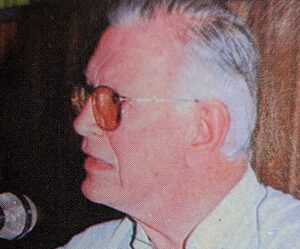
Introducing Richard De Smet SJ
RICHARD DE SMET (1916-1997) I have been reading Richard De Smet’s work for years and have found him to be the deepest and most erudite interpreter of Indian thought from
O único rito que sobrou (The Only Rite That Remains)
Sobre o meticuloso ritual do Ano Novo On the Meticulous Ritual of New Year
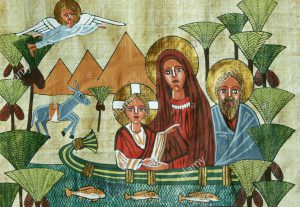
On the Feast of the Holy Family (na Festa da Sagrada Família)
Festa da Família Inquieta Feast of the Restless Family
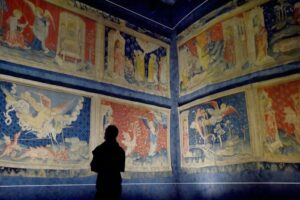
On Visually Reading the Apocalypse
In the late 14th century, Europe had passed through the Black Death, killing a third of its population (and a full half of its doctors and priests), was in the