
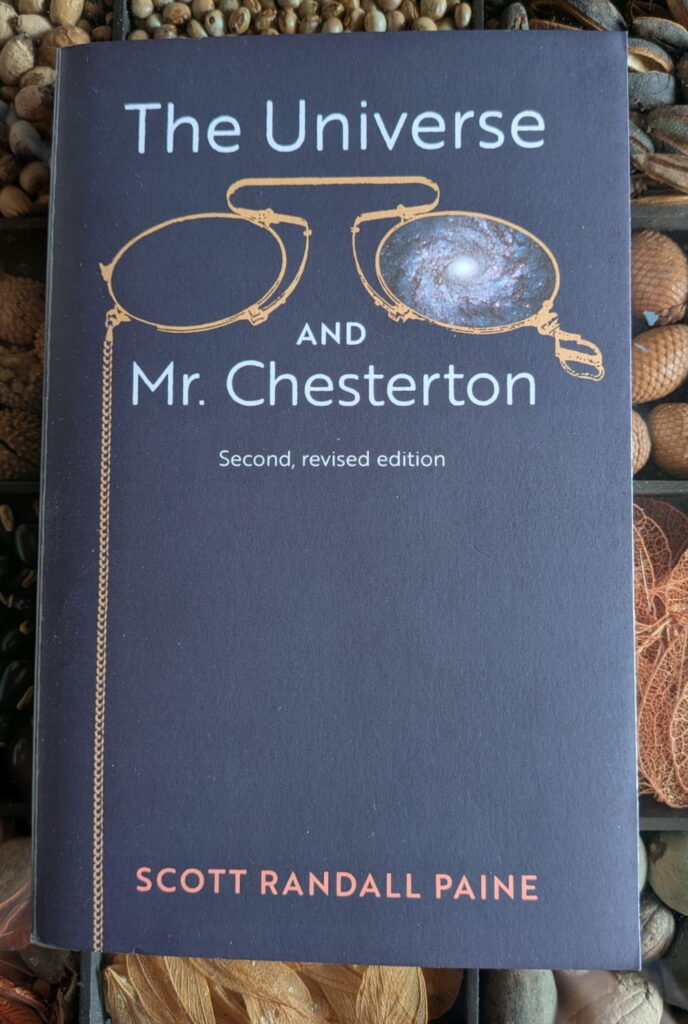
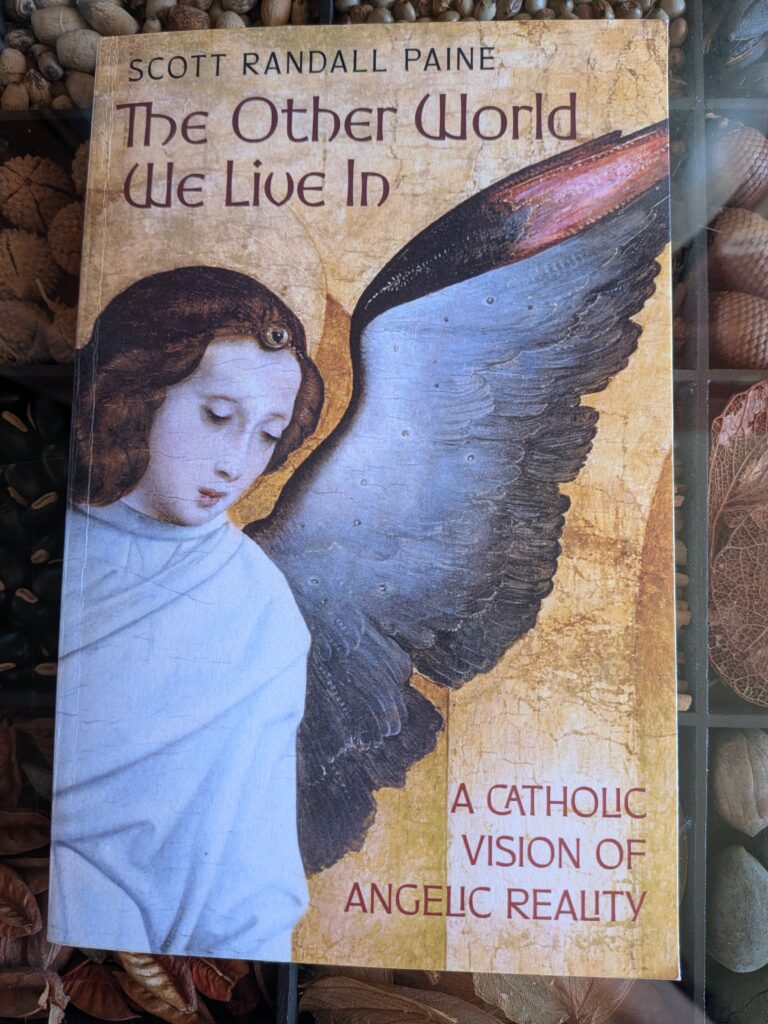
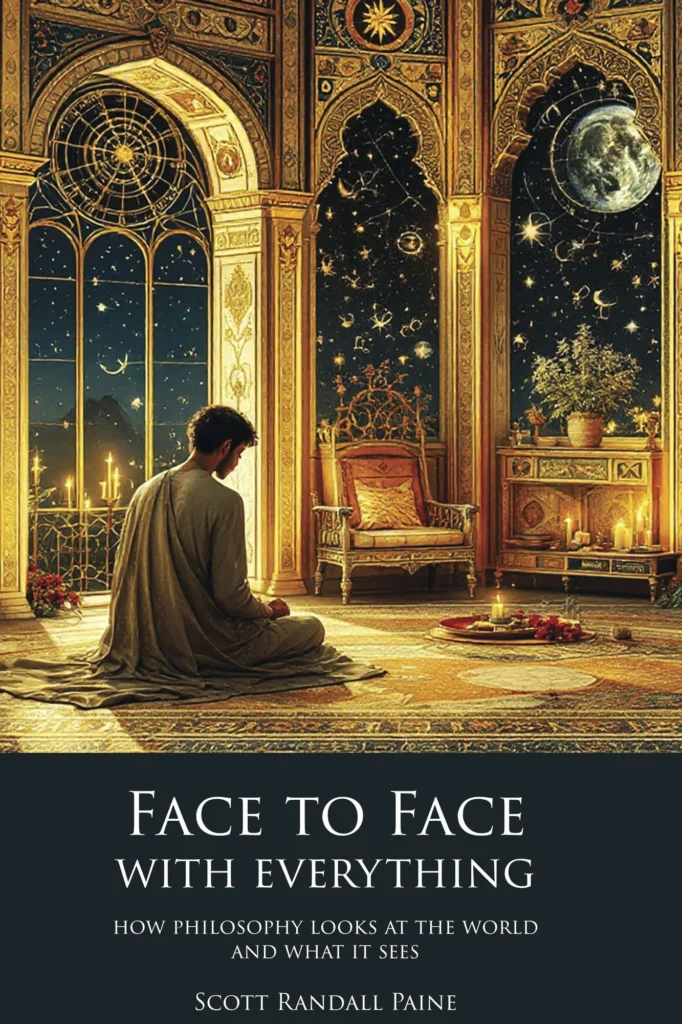
Listening to an interview with one of my favorite authors, the Frenchman Rémi Brague, I heard him comment that while writing three of his more well-known books, he did not realize until later, in retrospect, that they in fact constituted a thematic trilogy. After publishing my fifth book this year, I looked back on two of my previous publications and discovered that I was similarly composing a triad of books developing the same underlying theme. “Universe,” “World,” and “Everything” seem to be three variations on the same philosophical theme, perhaps most fully articulated in the third book. The theme itself, however, lies at the heart, in my view, of what makes philosophy a unique, but deeply human, form of knowledge. It could be summarized by simply saying that as humans we all long to look upon whatever we see in context, in proper perspective and with a focus appropriate to the nature of what lies before us.
I chose Chesterton’s book Orthodoxy not because I was interested in Christian apologetics, but rather because in that book I saw, and still see, an uncommon defense of the most basic principles of all theoretical and moral thought. They are illustrated by example and reductiones ad absurdum–arguably the only effective way to truly “prove” principles. These intellectual points of departure are by nature things we already know without proof, but without which no other proof can ever be mounted. Chesterton simply pulled this off in a most unusual, but profoundly convincing way. His defense of those principles, in an age replete with doubts and skepticism, taught us to remain faithful to those primordial lights that enable us to turn our minds to the whole of reality (the “universe”) with trust, humility and openness.
But more was needed. Not only with theological, but also with philosophical attention, I felt the need to include a profoundly unpopular perspective on all the world that surrounds us. From the beginning, the Greeks, the Jews, the Christians and indeed, even our difficult cousins, the Muslims, have assured us that the world in which we live is not exhausted by the mass and energy that sustain our corporal existence. Today’s physicists, although often enough materialists in their vision of reality, tell us that according to a purely material calculation, around 95% of our cosmos is still scientifically unidentified (so-called dark matter and energy). And mathematicians are still in disagreement about where mathematical entities and relations actually exist (whether in our minds, in a separate Platonic world, or somehow inherent in material reality itself). No one knows for sure. If, as most religious traditions teach, there exists also a “solidly” real world of immaterial beings that both surround our cosmos and are virtually present within it, then no philosopher can ignore its pertinence to philosophy’s interest in seeing all things in their connections.
Although not entirely aware of the path I was taking, at a recent seminar I proposed to examine the ways in which a philosopher confronts all areas of human knowledge and experience and brings the search for context and perspective not only to philosophy proper, but to every cognitive enterprise we undertake. This led to my 2025 book (the third pictured above).
Any one of these three books can be read profitably on its own, but for the dedicated philosopher (or theologian) reading them in order, from the Universe to the Other World and only then to Face to Face may be the most rewarding approach. In a world created by the Triune God it is perhaps inevitable that unsuspecting authors, under the illusion that they are working on three books, may in fact, subconsciously, be working on one.